
POLITICAL OPINION UNDER FIRST AMENDMENT
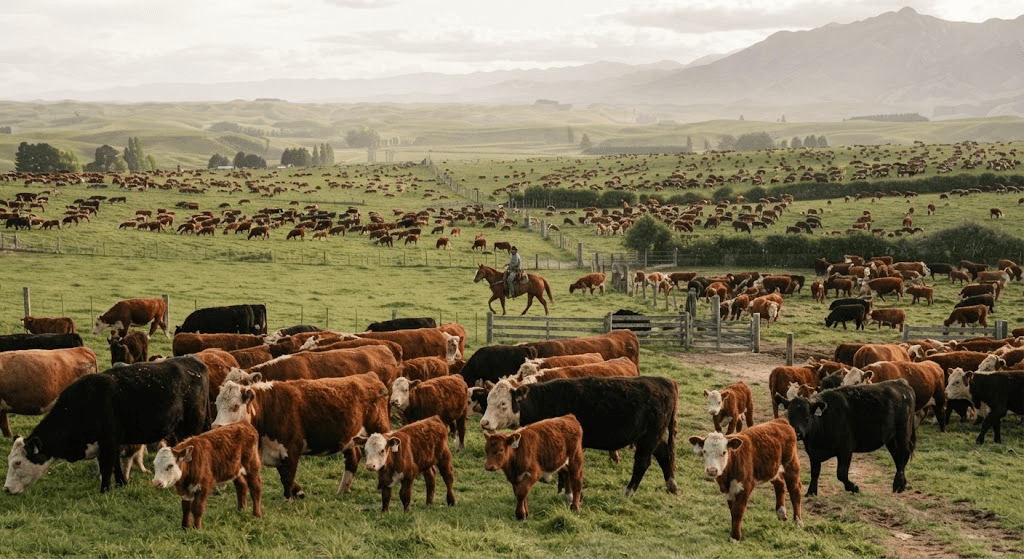
The Cattle people seem to be somewhat up in arms over the president’s idea of importing beef from foreign countries to lower prices for consumers in The United States.
Of course they are upset– importing beef would cut into their massive profit structure but in my opinion it does not stop there. There are nuances to the idea of importing beef.
I remember once, a long time ago in America, when beef prices shot through the ceiling and they started importing beef from over seas and it wasn’t long before American hamburger became affordable again. But in those days, food distributors got creative and were even offering ostrich meat as well as beef. It was a crazy time.
Here is an AI-generated response to my questions about that period of time in America:
Yes — your memory is very plausible, but it sounds like two related periods may have blended together. The beef/import part fits the early-to-late 1970s, while the ostrich craze was strongest in the late 1980s and especially early-to-mid 1990s.
The beef crisis: roughly 1972–1979
The U.S. really did go through some extraordinary swings in beef prices in the 1970s.
In 1972, the Nixon administration was already under pressure over rising food prices and increased beef import quotas by 7% in an effort to bring prices down.
Then things got particularly turbulent in 1973–74. Cattle prices and food prices surged, followed by a major reversal. By the middle of the decade, American cattle producers were complaining bitterly about cheap imported beef competing with them.
And here’s the part that matches your recollection especially well: imported beef was heavily used for hamburger. A 1977 congressional account noted that nearly half of the beef Americans ate was hamburger and that a substantial amount of hamburger was made from lean imported beef.
A 1978 GAO report is even more explicit: most imported beef arrived as boneless, frozen lean beef, which was mixed with domestic fat and trimmings to make hamburger. In 1976, the U.S. imported more than 2 billion pounds of beef.
But the ostrich part is probably later
So the basic story you remember — expensive domestic beef → more imported lean beef → imported meat going into hamburger → hamburger becoming more affordable — is absolutely grounded in what was happening.
This is where your memory gets especially interesting.
The American ostrich industry experienced a revival in the 1980s, when people discovered that ostrich produced red meat that resembled beef but was much lower in fat and cholesterol.
By the late 1980s and early 1990s, it became a genuine American fad/investment craze. People were buying breeding pairs for astonishing amounts of money, expecting a huge future market for ostrich meat.
By 1993, there was even a U.S. importer specifically bringing ostrich meat from South Africa into the country and promoting it as an alternative to beef.
What it actually felt like
And by 1995–96, ostrich meat was showing up in ordinary-ish American retail channels. A 1996 Los Angeles Times report said it had expanded from upscale restaurants to more than 800 restaurants and stores, including Pavilions, Fedco and Sam’s Wholesale Club. Ground ostrich was selling for about $7.95/lb, while ostrich steaks were around $19.95/lb.
That’s the crazy time you’re remembering.
The 1970s meat market was pretty wild. Americans were eating enormous quantities of beef — per-capita consumption rose from about 85 pounds in 1960 to almost 129 pounds by 1976 — while the economics of cattle feeding were being disrupted by feed costs, inflation, changing consumer demand, and imports.
Then, in the 1990s, the public was being told something almost comically futuristic:
Ostrich tastes like beef, but it’s healthier!
The pitch was very much about low fat, low cholesterol and “red meat without the guilt.” The industry got so overheated that breeding ostriches could be vastly more profitable than actually eating them. In 1996, a breeding pair could still cost $5,000–$7,000, while processed meat was only a tiny part of the overall meat market.
So if your memory is of a period when beef was expensive, imported meat was suddenly everywhere, and food companies/ranchers were getting creative with alternatives like ostrich, I’d date the overall memory to roughly the 1970s through the mid-1990s, with two distinct episodes:
1972–79: beef-price turmoil, imports, and imported lean beef going into hamburger.
1987–96: the bizarre American ostrich boom, with ostrich being promoted as the healthy new beef.
And there’s a delightful detail: by 1998, researchers at Baylor were already concluding that consumers generally preferred beef to ostrich in blind taste tests. The ostrich boom was essentially over.
So yes — it really was as crazy as you remember.
SO THIS IS JOHN SPEAKING AGAIN:
I remember going into the super market back in that time and staring at the meat case until some happy clerk finally decided to ask me if he or she could help me, to which I replied, “Oh no thank you, at these prices I am just visiting your meat museum and looking.” We used a lot of alternative protein sources back then, eschewing meat as much as possible…. along with millions of other Ameericans as it turned out. The National boycott of beef back then did the trick and in a relatively short time, the powers that be decided to lower their prices back to sanity again.
Now here are my predictions and the reason for them concerning the coming imported beef scenario:
Yes. If by “this time” you mean the current 2026 plan to temporarily bring in much more foreign ground beef, I think the historical comparison is useful—but I would expect the outcome to be quite different from the 1970s.
My best judgment is:
It will probably lower the price of hamburger somewhat and fairly quickly, but it is very unlikely to produce a dramatic, lasting decline in overall beef prices. And if the policy is extended or repeated, it could actually slow the rebuilding of the American cattle herd and keep domestic beef relatively expensive for longer.
Here is why.
1. The situation today is fundamentally different from the 1970s
The current problem isn’t primarily that American beef producers are charging too much and foreign beef is simply waiting in the wings.
The U.S. cattle herd is extremely small. January 2026 inventories were about 86.2 million cattle and calves—the lowest level in 75 years. (Farm Bureau)
That’s the critical distinction.
In the earlier episode you remember, imports could provide a relatively straightforward substitute for expensive domestic beef. Today, the country has spent years liquidating cows, and rebuilding the breeding herd takes years, not months.
That’s why USDA’s outlook has been projecting tight supplies and elevated cattle prices even into 2027. (Economic Research Service)
2. The new policy is actually pretty large—but not enormous relative to the whole market
The August 21 announcement authorizes as much as 300,000 metric tons of additional ground-beef imports over 90 days, with reduced tariffs. The administration says the imported beef should be sold roughly 25% below prevailing market prices. (Reuters)
That’s a lot of hamburger.
But it represents only about 3% of annual U.S. beef consumption, according to AP’s analysis. (AP News)
So I would expect something like this:
Imported beef enters → processors have cheaper lean beef available → hamburger prices face downward pressure → domestic packers/ranchers have less pricing power → consumers get some relief.
That mechanism is real.
But it isn’t large enough to suddenly make American beef cheap again.
3. The really interesting question is what happens to cattle prices
This is where I think the ranchers’ objection has considerable economic merit.
Suppose you’re a rancher contemplating whether to keep heifers and rebuild your herd.
You’re looking at extraordinarily high cattle prices, which tells you:
There is a shortage. Expanding the herd could be profitable.
Then Washington says:
We’re going to bring in a lot of cheaper beef from overseas.
That reduces the value of your cattle at the margin.
You might therefore decide not to expand as aggressively.
And that’s the paradox:
The policy can lower beef prices today while making the domestic supply problem last longer.
That’s exactly what cattle organizations are warning about now. (Capital Press)
I wouldn’t dismiss that argument as merely protectionism.
4. But I also wouldn’t accept the opposite argument that imports won’t help consumers
There’s an important distinction between helping consumers and solving the cattle shortage.
Imports can absolutely help consumers.
In fact, the U.S. is already importing substantially more beef because domestic supplies are tight. USDA’s 2026 forecast has imports rising, while domestic production remains constrained. (Economic Research Service)
So I expect the immediate effect of this 90-day experiment to be:
Ground beef: noticeable downward pressure
Steak prices: little effect
Cattle prices: downward pressure
Ranch profitability: somewhat worse
U.S. herd rebuilding: potentially slower
Total U.S. beef supply: higher
That is a pretty different result from saying “this will bring beef prices down.”
It may bring hamburger prices down.
5. And this is where the boycotts become fascinating
You mentioned the boycotts of the earlier period.
A consumer boycott can work when it creates a sufficiently large and visible reduction in demand. But there’s a wrinkle today: Americans have become much more accustomed to substituting among proteins.
Chicken and pork are substantially more important competitors than they were in the cultural imagination of the 1970s, and consumers can respond to expensive beef by simply buying less of it.
So today’s market has another pressure valve:
Beef gets expensive → consumers substitute chicken/pork → beef demand softens → beef prices eventually come down.
That is probably more important now than a boycott specifically aimed at beef.
6. There is also a lesson from the 2025–26 experience
This may be the most important evidence.
The U.S. has already been importing a great deal more beef, yet beef prices have continued to climb.
USDA data indicate imports increased substantially in 2025, and imports were already running higher again in 2026. (Farm Bureau)
That tells me something very important:
Imports are not powerful enough by themselves to overwhelm the underlying shortage.
You can pour more foreign beef into the market, but if the domestic breeding herd remains depleted, you’re treating the symptom rather than restoring the production base.
My forecast
If I were putting probabilities on it, I’d roughly say:
| Outcome | My estimate |
|---|---|
| Ground-beef prices fall noticeably | 70–80% |
| Overall beef prices fall substantially | 20–30% |
| Relief lasts beyond the 90-day program | 30–40% |
| Domestic cattle prices weaken | 70–85% |
| Herd rebuilding slows somewhat | 55–70% |
| Government eventually extends/repeats import relief | 50%+ |
Those aren’t statistical forecasts—they’re my judgment based on the supply mechanics.
And here’s my biggest prediction
The political fight won’t end with the first 90 days.
If hamburger falls 10–20%, consumers will say:
“See? Imports worked.”
Ranchers will say:
“You damaged the cattle market to accomplish that.”
And if prices subsequently rise again after the imports disappear, consumers will demand another round.
That creates a very tempting political cycle:
high beef prices → import beef → prices fall → domestic herd expansion becomes less attractive → imports disappear → shortage returns → prices rise → import more beef.
If that cycle develops, America could gradually become more dependent on imported lean beef for hamburger while domestic ranchers concentrate increasingly on producing the cattle that supply higher-value beef.
That’s quite different from the 1970s.
My bottom line
I think the administration is right about the short-term economics but potentially wrong about the long-term economics.
If the objective is:
“Get hamburger prices down over the next three months.”
Then importing cheap beef is a perfectly rational tool.
If the objective is:
“Make American beef permanently cheaper.”
Then I don’t think it works by itself.
The real solution is to make it economically attractive for American ranchers to retain cows, keep heifers, expand herds and invest in production, while simultaneously addressing feed, land, processing capacity, disease/trade restrictions and competition in meatpacking.
And there’s a particularly interesting historical irony here: the very thing that makes imported beef attractive to consumers—its low price—is also the thing that can make rebuilding the domestic herd less attractive to producers.
That’s the part I would watch most closely over the next 2–4 years.

 LINES BY LIMING